THE ARCHITECT OF THE CUYABENO WILDLIFE RESERVE
Founder’s Message: Dr. Daan Vreugdenhil
Cuyabeno Lodge was born out of a deep passion for nature and a commitment to protecting one of the world’s most precious ecosystems. I’m “Parkman” Dr. Daan Vreugdenhil, a conservationist and ecotourism pioneer, and I’ve spent more than half a century studying and working for the conservation of nature. My journey began as a young scientist, drawn to the Amazon’s incredible biodiversity and unique culture. Over time, it became clear that in order to safeguard this fragile environment, we needed to bridge the gap between local communities, conservation efforts, and sustainable tourism.
The Cuyabeno Lodge is my response to that challenge. The lodge is designed to offer our guests a rare chance to experience the Amazon as it truly is – a place of wonder, mystery, and vital importance to the health of our planet. At the same time, we are deeply committed to working with indigenous communities and to promote sustainable practices. I believe that through education, responsible tourism, and a shared respect for nature, we can all contribute to the preservation of this magical place, the Cuyabeno Wildlife Reserve.
Quality guides are essential for exploring and appreciating the Amazon Jungle. I personally trained our guides, the best guides of Cuyabeno.
I invite you to join us on this incredible journey into the heart of the Amazon, where you will not only discover one of the world’s most incredible ecosystems but also take part in its conservation.
“Parksman” Dr. Daan Vreugdenhil
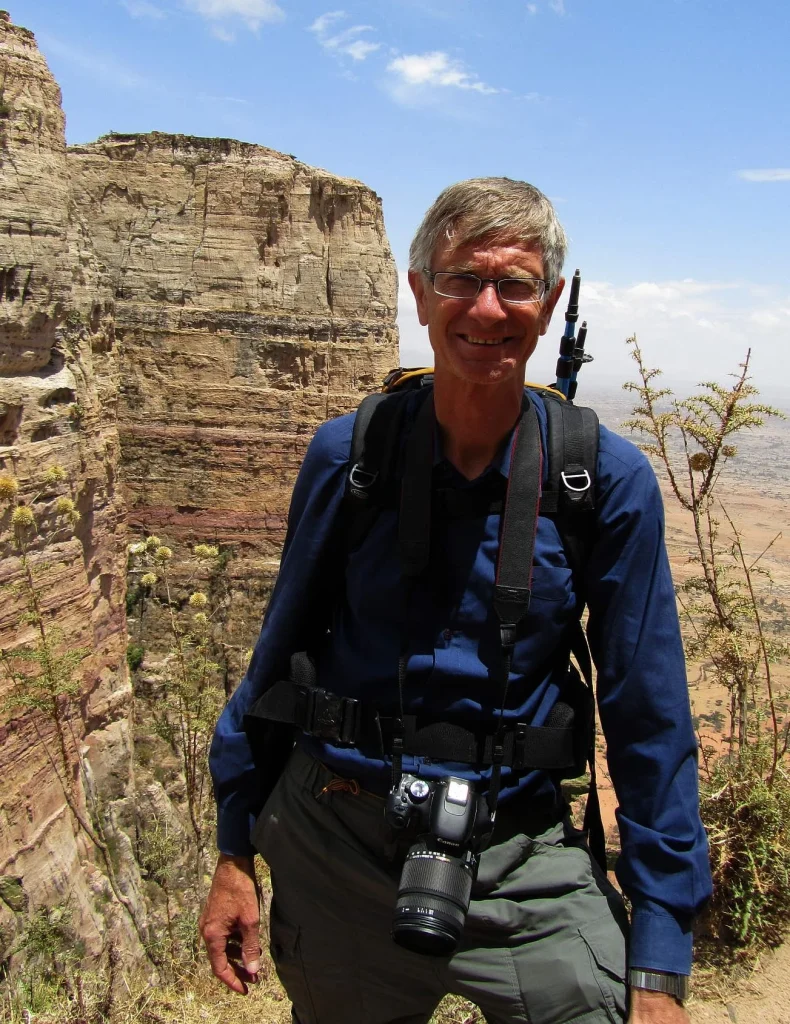
“Parksman” Dr. Daan Vreugdenhil
The direct link between the lodge and the creation of the Cuyabeno Wildlife Reserve: Aided by a United Nations project, the Ecuadorian government began a study to select and declare a formal system of protected areas in the mid-1970s. Dutch Conservation ecologist, “Parksman” Dr. Daan Vreugdenhil was in charge of Ecuador’s Amazon region, which at the time consisted of 90 percent of virgin Amazon forest. Having carried out many expeditions, by motorized canoe, STOL (Short Take Off and Landing) airplanes and on foot, to gather scientific and anthropological data on the area’s biodiversity and indigenous peoples, he selected the Cuyabeno Wildlife Reserve (then 150,000 hectares) and Yasuni National Park (then 2,000,000 hectares) as the main lowland Amazon reserves. In addition, he proposed 7 Eastern Andean protected areas and indigenous territories for each Amazon tribe.
He worked alongside Ecuadorian conservationists, biologists, and governmental authorities to create Ecuador’s system of protected areas, laying the groundwork for what would later become the National System of Protected Areas (SNAP), which today protects more than 20% of the country’s territory. His contributions to the establishment of the Cuyabeno Wildlife Reserve and Ecuador’s protected areas system in the 1970s form and intrinsacle part of the country’s conservation history.
In Daan’s vision, Cuyabeno was the most suitable for tourism for the following reasons:
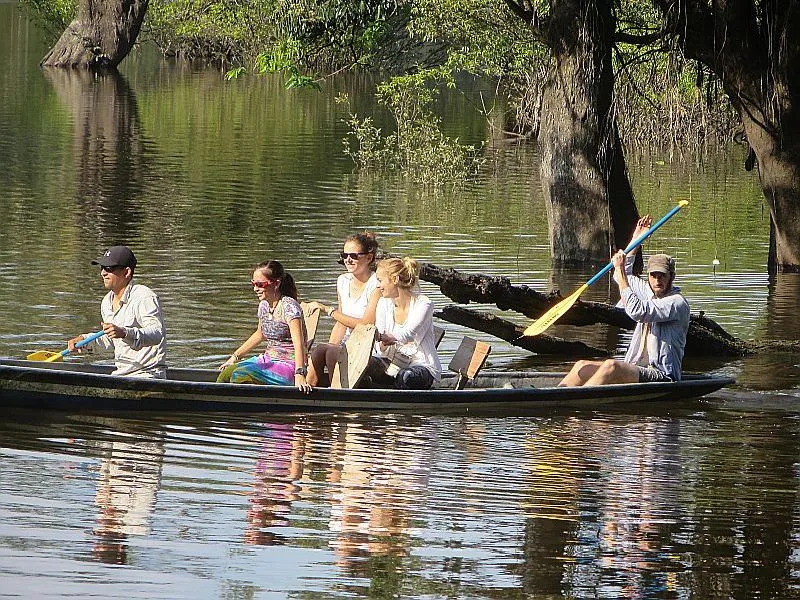
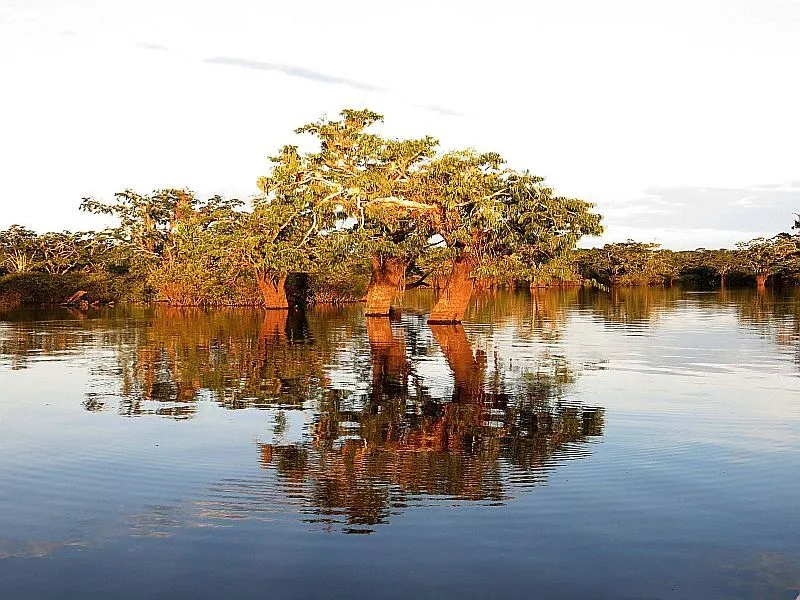
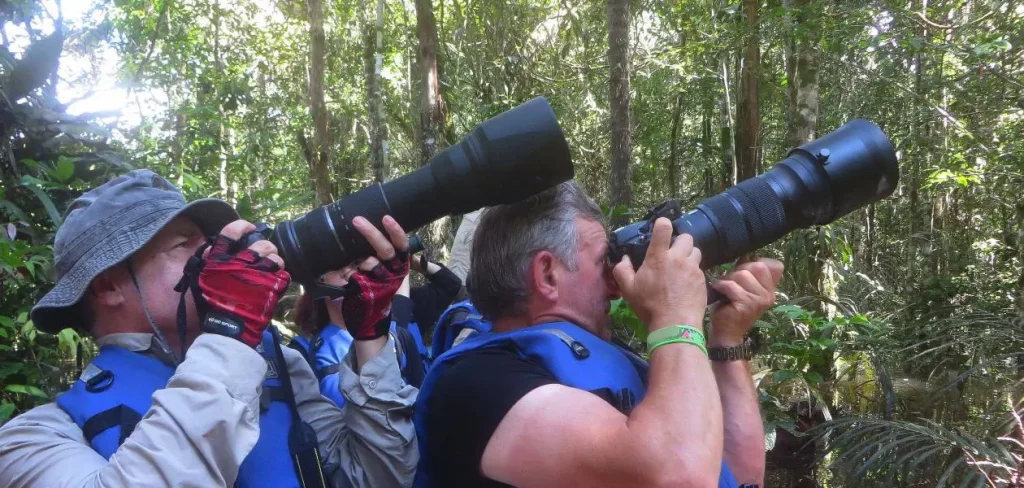
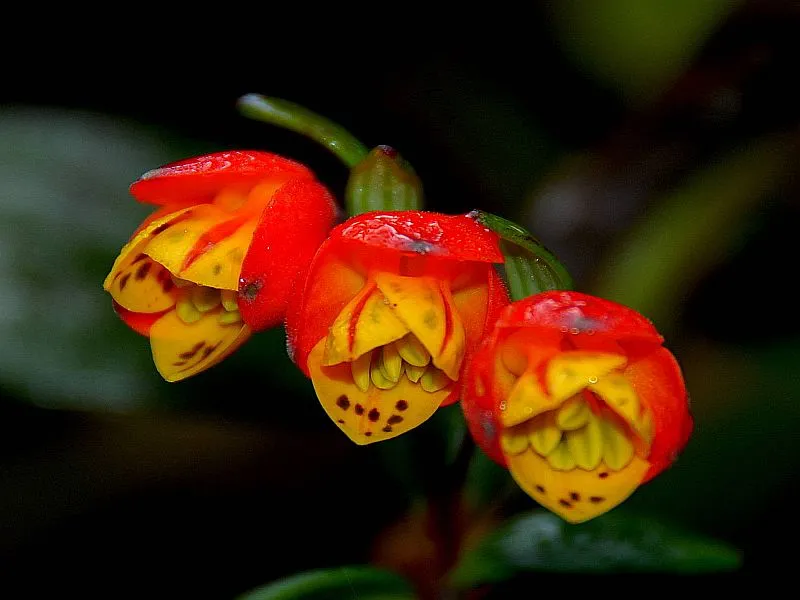
- One sees many more animals along slow-flowing narrow rivers where light breaks through the canopy. This is why: Most animals in the jungle, move about high up in the tree crowns. So, When walking through the forest, the animals are difficult to observe. While, looking up, the contrast between the sky and the leaves is so overwhelming, that they appear almost black. Along narrow rivers, though, trees are lower and light penetrates to the lower branches and shores, so you can watch the animals and see flowers from close by. Further, while sitting down in a canoe, one can find an animal faster in the viewer of his/her binoculars and camera, hold it steadier, while a looking up a bird or mammal in a field guide is quicker with the book in one's lap;
- There is no other park in the Amazonian Andes countries Venezuela, Colombia, Peru or Bolivia with so many lakes and creeks that is so conveniently accessible as Cuyabeno. Nowhere in South America exists another Andean-Amazon park with so many narrow rivers and lakes.
In the early 1980s, when the reserve faced threats from encroachment, Dr. Vreugdenhil didn’t just watch. He returned to Ecuador and, alongside his friend, then Cuyabeno director Dr. Flavio Coello, they successfully proposed the government to expand the reserve from 150,000 to nearly 600,000 hectares to the border with Peru, securing the vast wilderness you can enjoy today.
When you stay at the Cuyabeno Lodge, you are part of that legacy. The Cuyabeno Lodge was founded by the expert who drafted the boundaries of this jungle. Dr. Vreugdenhil established Cuyabeno Lodge to prove a critical theory: that responsible visitation is the most powerful weapon against destruction.
Our Mission Statement of the Cuyabeno Lodge
At our Cuyabeno Lodge, our mission is to provide an authentic and immersive experience in the Amazon while prioritizing sustainability, conservation, and the well-being of local communities. We aim to introduce our guests to the untamed beauty of the Cuyabeno Wildlife Reserve in a way that fosters respect, understanding, and environmental stewardship. We are dedicated to preserving the delicate balance of the rainforest ecosystem while offering meaningful, sustainable tourism that benefits both nature and the people who call it home.
Our slogan: Conservationists Never Give Up
Legacy: A Lifelong Commitment to Conservation
Dr. Vreugdenhil’s efforts in the 1970s were just the beginning of his lifelong commitment to conservation. Beyond the creation of the Cuyabeno Wildlife Reserve, he continued to work on various conservation initiatives in Ecuador and throughout Latin America. His belief in the power of ecotourism as a tool for both conservation and sustainable development led him to the founding of the Cuyabeno Lodge. The lodge serves as a model of sustainable tourism, offering visitors the chance to experience the Amazon firsthand while also contributing to the preservation of its ecosystems and supporting local communities.
Dr. Vreugdenhil’s role in the creation of the Cuyabeno Wildlife Reserve and his broader contributions to Ecuador’s protected areas system remain a testament to his visionary leadership and commitment to the Amazon. He continues to inspire conservationists, researchers, and travelers around the world, emphasizing the need for a harmonious balance between people and nature.
Contact us
